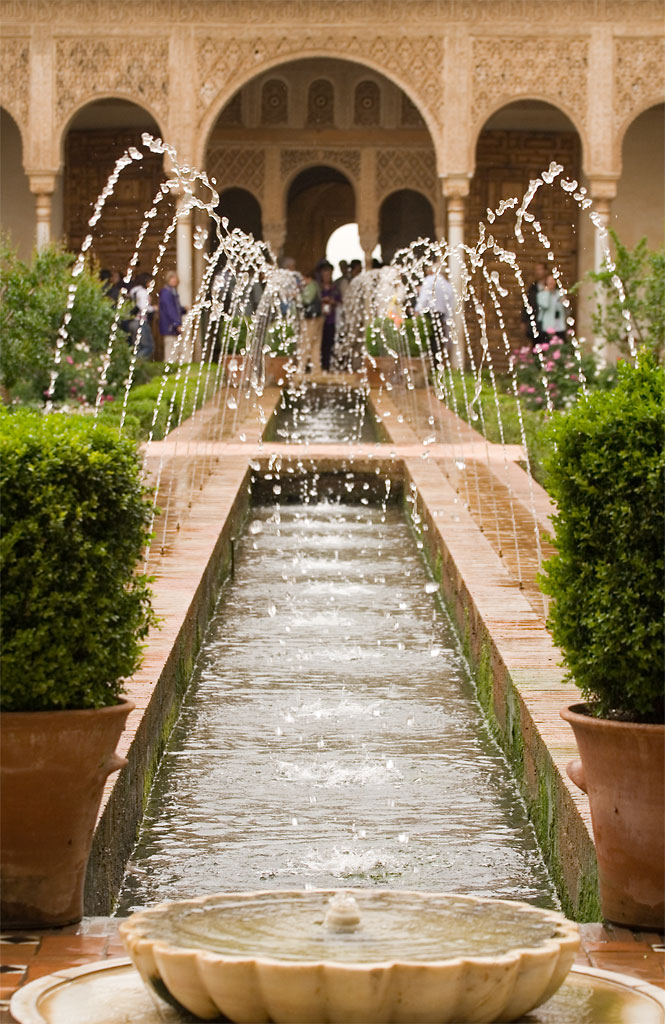
Cultural itineraries between Granada and the Costa Tropical
Nasrid castles, a garden of water, Roman remains and the Alhambra, organised from a base between the mountains and the sea.
✓ Facts checked on 8 November 2026

One day in Vélez de Benaudalla
| When | What |
|---|---|
| Morning | Jardín Nazarí (closed Monday and Tuesday; Sunday mornings only) |
| Late morning | Walk up to the Ulloa castle (visits only when the town hall opens it) and La Placetilla |
| Lunch | In the village; pestiños and roscos from the local bakery |
| Afternoon | Drive up the Guadalfeo valley towards the Rules reservoir |
| Evening | Back in the village; check the town hall agenda for evening events in the Jardín Nazarí |

A day of heritage and nature
Start with the Jardín Nazarí in the morning, continue to Salobreña to walk up through the white old town to its Nasrid castle, and finish on one of the beaches on either side of the Peñón.
Salobreña castle: a Nasrid residence and royal prison
Turismo de Salobreña dates the town’s Nasrid period to 1232–1489. In that time the castle became a summer residence of the Nasrid sultans and a comfortable prison for deposed emirs: Yusuf III was held there for 11 years before he recovered the throne in 1408, and the future Muhammad IX was imprisoned there before being proclaimed king in Granada in 1419.
What stands today mixes periods. The Socorro del Mar gate and the Water Tower appear to belong to the Nasrid alcazaba, and a bath served the Nasrid royal family; the main gate-tower and the artillery barrier were built after the Christian conquest.
Moorish heritage away from the crowds
Not every Moorish site in the province needs a timed ticket booked weeks ahead. The Jardín Nazarí is a village garden with a €3 ticket; the Ulloa castle opens when the town hall announces it; Salobreña’s castle crowns a white old town. These are small sites, not substitutes for the Alhambra, but they suit a slower visit. Check opening days, which are more limited.
- Quiet Andalusia: a slower trip between Granada and the coast
- The Generalife and Granada’s gardens: the reference Nasrid garden, and how to book it
Three days of cultural discovery
| Day | Plan |
|---|---|
| Day 1 | Vélez de Benaudalla: Jardín Nazarí, castle, village |
| Day 2 | Granada: Alhambra and Generalife (book timed tickets), then the Albaicín and the Mirador de San Nicolás |
| Day 3 | Coast: Salobreña’s Nasrid castle and old town, then Almuñécar: San Miguel castle, Cueva de Siete Palacios museum and the Roman aqueduct |
Five days between Granada and the Costa Tropical
| Day | Plan |
|---|---|
| Day 1 | Vélez de Benaudalla: Jardín Nazarí, castle, village |
| Day 2 | Granada: Alhambra and Generalife |
| Day 3 | Granada: Albaicín, Mirador de San Nicolás, city centre |
| Day 4 | Alpujarra: the Poqueira villages (Pampaneira, Bubión, Capileira) |
| Day 5 | Coast: Salobreña castle, Almuñécar, and Motril’s sugar-cane museum |
Before you plan: honest constraints
You will drive
Without a car, these combinations are difficult; coach timetables must be checked with the operator. If you prefer not to drive at all, a base in Granada or on the coast is easier.
Book the Alhambra
Tickets have fixed times for the Nasrid Palaces and often sell out in high season.
Opening days
The Jardín Nazarí is closed on Monday and Tuesday.
Mountain roads
The Alpujarra villages are reached on winding roads: plan a full day.
Map of the itineraries
Map of the places in these itineraries
Cultural and natural places within reach of Vélez de Benaudalla. Points use official or documented coordinates.
© OpenStreetMap · Coordinates: Diputación de Granada, Wikidata · Open data (JSON)
Vélez de Benaudalla · Historic garden
Jardín Nazarí
Garden estate of almost 7,000 m² with house, mill, irrigation channel and small caves in the cliff; garden and house mostly 16th century, keeping an Arab-origin water system.
Visiting: Closed Monday and Tuesday; Wednesday–Saturday morning and afternoon (seasonal); Sunday 10:00–13:30. €3 (reduced €1.50). Check before you go.
Vélez de Benaudalla · Castle (BIC)
Castillo de los Ulloa
Castle most likely built between 1494 and 1523 for Juan de Ulloa, over Muslim-period remains; restored in 2002.
Visiting: Openings are announced by the town hall (+34 958 65 80 11).
Vélez de Benaudalla · Reservoir
Embalse de Rules
Reservoir on the Guadalfeo, completed in 2003, upstream of the village.
Visiting: Open-air site.
Costa Tropical · Nasrid castle (BIC)
Castillo de Salobreña
Mainly Nasrid and early-modern castle; royal residence and place of confinement for members of the Nasrid dynasty (Yusuf III was held here). Taken by the Catholic Monarchs in 1489.
Visiting: Check hours and tickets on the official website before you go.
Costa Tropical · Castle and museum (BIC)
Castillo de San Miguel
Hilltop castle over the old town of Almuñécar, declared a Bien de Interés Cultural in 1993; it houses the town’s history museum.
Visiting: Check hours and tickets on the official website before you go.
Costa Tropical · Archaeological museum
Cueva de Siete Palacios
Archaeological museum in the basement of a Roman building; its highlight is an Egyptian quartz vessel linked to the pharaoh Apophis I (16th century BC).
Visiting: Check hours and tickets on the official website before you go.
Granada · Nasrid palace-city (UNESCO)
Alhambra
The only preserved palatine city of the Islamic period and the best example of Nasrid art (UNESCO).
Visiting: Timed tickets, often sold out: book on the official website.
Granada · Nasrid palace and gardens (UNESCO)
Generalife
Country estate of the Nasrid rulers, built at the end of the 13th or start of the 14th century, with gardens and orchards; much of today’s planting is 20th century.
Visiting: Visited with an Alhambra ticket: check the official ticket types.
Granada · Viewpoint
Mirador de San Nicolás
Viewpoint in the Albaicín facing the Alhambra.
Visiting: Open-air site.
Alpujarra · White village (Alpujarra)
Pampaneira
The lowest of the three villages of the Poqueira gorge, a protected historic ensemble.
Visiting: Open-air site.
Where to stay for these itineraries
Between Granada and the coast, Vélez de Benaudalla lets you change direction every day without changing accommodation.
Frequently asked questions
What cultural excursions can I take between Granada and Motril?
The Jardín Nazarí and the Ulloa castle in Vélez de Benaudalla, the Nasrid castle of Salobreña, Almuñécar’s San Miguel castle, Roman aqueduct and Cueva de Siete Palacios museum, Motril’s sugar-cane museum, and the Alhambra in Granada.
Can I explore the area without spending all my time driving?
Partly: one day can be spent entirely in Vélez de Benaudalla on foot. For Granada, the coast and the Alpujarra you will need a car; plan one main destination per day.
Is the Costa Tropical a good destination for cultural tourism?
Yes, alongside the beaches: Nasrid castles, Roman remains in Almuñécar, the sugar-cane heritage of Motril, and Granada within reach.
Is Vélez de Benaudalla too far from the beach?
It is inland from Motril, at the end of the A-44: the beaches of Motril and Salobreña are reached by car. If you want to walk to the beach, stay on the coast instead.
Where should I stay to explore Granada, its heritage and the Costa Tropical?
Between the two, for example in Vélez de Benaudalla, if you have a car; in Granada city if the Alhambra and city life are your priority; on the coast if beaches come first.
What is the history of Salobreña castle?
According to Turismo de Salobreña, in the Nasrid period (1232–1489) it became a summer residence of the sultans and a prison for deposed emirs, including Yusuf III, held there for 11 years before regaining the throne in 1408. Parts of the Nasrid alcazaba survive alongside walls and towers added after the Christian conquest.
Sources · Facts checked on 8 November 2026
- Ayuntamiento de Vélez de Benaudalla · El Castillo (agenda)
- Diputación de Granada · Jardín Nazarí de Vélez de Benaudalla
- UNESCO World Heritage · Alhambra, Generalife and Albayzín, Granada
- Patronato de la Alhambra y Generalife · Organise your visit
- Turismo de Salobreña · Castle
- Turismo de Salobreña · The castle-alcazaba of Salobreña in the Islamic period (13th–15th century)
- Wikipedia (es) · Castillo de San Miguel (Almuñécar)
- Spain.info · Cueva de Siete Palacios Archaeological Museum
- Andalucía.org · Aqueduct and Roman baths in Almuñécar
- Andalucía.org · Museo Preindustrial de la Caña de Azúcar