Holidays in Andalusia: which area to choose
Andalusia is big, and the cities, coasts and mountains make very different holidays. An honest comparison of eight areas, including what each does badly.
✓ Facts checked on 8 November 2026

Eight areas at a glance
| Area | Suits | Strengths | Limits |
|---|---|---|---|
| Seville | City breaks, first visits, culture | Cathedral, Alcázar and Archivo de Indias (UNESCO); Plaza de España; Santa Cruz | No beach nearby; very hot in summer; busiest in Holy Week and the April Fair |
| Córdoba | Culture, a short stay, a stop by train | Historic centre and Mosque–Cathedral (UNESCO); Medina Azahara (UNESCO); the Patios in May | Among the hottest summers in Spain; inland, no sea |
| Málaga city | Art, food, a city with a beach | Picasso’s birthplace; Alcazaba, Gibralfaro, Roman theatre; the region’s busiest airport | Busy all year; one large city rather than a village feel |
| Costa del Sol | Families wanting everything on foot, golf, nightlife, no car | Wide choice of hotels; C-1 train from the airport to Torremolinos, Benalmádena and Fuengirola | Heavily built-up coast; mass tourism in high season |
| Granada | Culture, the Alhambra, tapas | Alhambra and Albaicín (UNESCO); Sierra Nevada next door | Nasrid Palaces on a fixed time slot that must be booked; no beach in the city |
| Alpujarra & Sierra Nevada | Walkers, slow travel, mountain villages | National Park; Poqueira villages protected as historic ensembles | Narrow winding roads; snow possible in the upper villages in winter; a car is almost essential |
| Costa Tropical | Quieter beach holidays, snorkelling, mild winters | Small towns (Almuñécar, Salobreña, Motril); Granada and the Alpujarra within day-trip reach | Beaches mostly dark sand and pebbles; fewer flights; best with a car |
| Inland villages & towns | Away from mass tourism, heritage, rural stays | Úbeda and Baeza, Antequera Dolmens (UNESCO); working villages | Few services in small villages; public transport is limited |
Seville: the great city break
Seville is the capital of Andalusia and the classic first visit. Its Cathedral (with the Giralda), the Alcázar palace and the Archivo de Indias are listed together by UNESCO as a World Heritage Site. The Plaza de España was built for the 1929 Ibero-American Exposition, and the Santa Cruz quarter lies on the site of the former Jewish quarter.
Who it does not suit: anyone who wants the sea on the doorstep, or who struggles with heat. At Seville airport the average daily maximum in August is 36.2 °C (normals 1991–2020). Holy Week (Semana Santa) and the April Fair, held about two weeks later, are spectacular but the city is at its busiest.

Córdoba: monuments in a compact centre
Córdoba’s historic centre is a UNESCO World Heritage Site: first the Great Mosque (1984), then, from 1994, the surrounding streets, the Alcázar, the Roman Bridge and the Calahorra Tower. The caliphal city of Medina Azahara, just west of the city, was added to the World Heritage list in 2018. In early May, the Fiesta of the Patios, on UNESCO’s intangible heritage list since 2012, opens private courtyards to visitors.
Córdoba has high-speed trains to Seville, Málaga and Madrid, so it works as a stop on a western circuit without a car. The limit is summer: average highs are around 37 °C in July and August.

Málaga and the Costa del Sol: easy, busy, well connected
Málaga city
Pablo Picasso was born here; the Museo Picasso Málaga opened in 2003 and the Centre Pompidou Málaga in 2015. The Moorish Alcazaba, Gibralfaro castle and a Roman theatre sit side by side in the centre. Málaga–Costa del Sol is the busiest international airport in Andalusia.
The Costa del Sol
Mainly in the province of Málaga: Torremolinos, Benalmádena, Fuengirola, Marbella and Estepona to the west, Rincón de la Victoria, Torrox and Nerja to the east. It has the largest concentration of golf courses in continental Europe, and the C-1 suburban train links Málaga, the airport, Torremolinos, Benalmádena and Fuengirola.
Its limits
Much of the coastline was built up quickly during the tourism boom of 1959–1974, and in high season it is mass tourism. If you want small towns and a slower pace, look further east.
- Costa Tropical or Costa del Sol?: the two coasts side by side
- Which airport?: Málaga or Granada
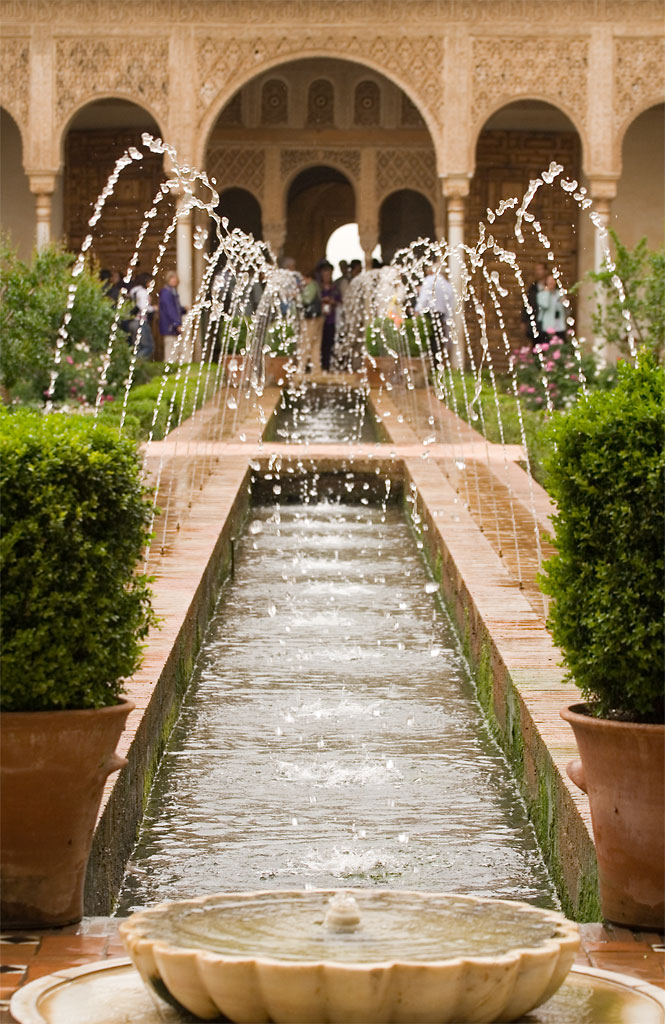
Granada: the Alhambra, with mountains behind
Granada is the cultural heart of eastern Andalusia. The Alhambra has been a UNESCO World Heritage Site since 1984, extended in 1994 to the Albaicín. Entry to the Nasrid Palaces is on a fixed time slot, limited to 300 people per half hour, and a late arrival loses the slot. Book well ahead.
Granada’s advantage is what lies around it: Sierra Nevada rises to the south-east, and the A-44 runs south to the Costa Tropical. Its limit as a holiday area on its own is that there is no beach.
- Granada and the Alhambra: tickets, Nasrid Palaces, Albaicín
The Alpujarra and Sierra Nevada: villages and high mountains
Sierra Nevada National Park was declared in 1999 and covers parts of the provinces of Granada and Almería; Mulhacén, at 3,479 m, is the highest summit of mainland Spain. On its southern slopes, the Alpujarra is a landscape of terraced valleys and white villages. Pampaneira, Bubión and Capileira, in the Poqueira gorge, are protected historic ensembles linked by waymarked paths.
It suits walkers and slow travellers. It does not suit anyone who dislikes mountain driving: the roads are narrow and winding, and in winter snow can reach the upper villages.
- The white villages of the Alpujarra: Poqueira, Trevélez, Lanjarón, Órgiva
- Hiking guide: trails with published figures

The Costa Tropical: the quieter coast of Granada
Granada’s coast runs between the Málaga border and Almería, with three main towns: Almuñécar (Roman remains, San Miguel castle, the bay of La Herradura), Salobreña (a white town on a rock crowned by a Nasrid castle; historic quarter protected since 2017) and Motril, the largest town and port. The Charca de Suárez wetland in Motril is a protected nature reserve.
It suits families and couples who want a beach holiday at a calmer scale. Its limits: most beaches are dark sand mixed with gravel or pebbles, summer weekends are still busy, and with fewer flights and trains than the Costa del Sol, a car makes a big difference.
- Beaches of the Costa Tropical: beach by beach
- The Costa Tropical, town by town: Almuñécar, Salobreña, Motril

Inland villages and towns: away from mass tourism
Away from the coasts and the big three cities, inland Andalusia is mostly working towns and villages where agriculture, not tourism, sets the rhythm. Two UNESCO sites are worth a detour: the Renaissance ensembles of Úbeda and Baeza, in the province of Jaén, and the Antequera Dolmens, in the province of Málaga.
Smaller villages such as Vélez de Benaudalla (about 3,100 inhabitants), in the Guadalfeo valley between Granada and the sea, are quiet because they are not resorts, not because they are “secret”. The trade-off is fewer shops and restaurants, and buses that rarely suit a visitor’s day.
Our angle: the Granada – Alpujarra – Costa Tropical triangle
In the east of Andalusia, three very different landscapes sit close together: Granada and the Alhambra to the north, the Alpujarra and Sierra Nevada to the east, and the Costa Tropical to the south. The A-44 links Granada with the coast. Combining them gives a holiday with culture, mountain villages, walking and beach days, without the scale of the Costa del Sol.
Honest limits: Seville and Córdoba are far from this triangle and are better visited on a separate trip or as a two-stop circuit; the beaches are not fine golden sand; and without a car, connecting the three areas takes careful planning with coach timetables (ALSA). If you want resorts, nightlife or a train from the airport, the Costa del Sol suits you better.
- Where to stay in the triangle: coast town, Granada, Alpujarra or the Guadalfeo valley
- With or without a car: what is realistic without one

Coast, mountains or cities? Which area for which trip
A family or relaxing holiday
Costa del Sol if you want everything walkable and no car; Costa Tropical if you prefer smaller towns and can drive. Avoid planning long city days in Seville or Córdoba in July and August with young children.
Culture first
Seville and Córdoba together, or Granada with the Alhambra booked ahead.
Away from mass tourism
The Alpujarra, inland villages and the Costa Tropical outside July and August. Summer weekends are busy everywhere on the coast.
Walking and nature
Sierra Nevada and the Alpujarra; check the season: high routes can hold snow well into spring.
A bit of everything
The Granada – Alpujarra – Costa Tropical triangle, with a car.
- When to go: season by season
How to plan a week in Andalusia
One week is enough for one half of Andalusia, not both. In the west, two bases work well: Seville for three or four nights, with Córdoba by high-speed train, and optionally a final stop in Málaga. In the east, one base can be enough: Granada city, a coast town or the Guadalfeo valley, with day trips to the Alhambra, the Alpujarra and the beaches.
If you want to combine both halves, accept more time on the road and check every journey in a route planner before booking.
- Itineraries in 3, 5 or 7 days: mixed plans between Granada and the coast
- When to go: heat, rain and festivals
A base for the eastern triangle
Rincón Salvaje is a two-bedroom holiday duplex for up to 4 guests in Vélez de Benaudalla, inland in the Guadalfeo valley at the southern end of the A-44. It has a kitchen, terrace and a seasonal pool open until 31 October. It is a base for Granada, the Alpujarra and the Costa Tropical, not for Seville or Córdoba. It is booked only through Airbnb and Booking.com.
- The stay: Rincón Salvaje, photos and details
- Remote work in Andalusia: city, coast or village for a stay of several weeks
Frequently asked questions
Where should I go on holiday in Andalusia?
It depends on what you want. For monuments, go to Seville and Córdoba. For an easy beach holiday with many flights and no car, go to Málaga and the Costa del Sol. To combine sea, mountains and the Alhambra, go to the Granada – Alpujarra – Costa Tropical area, ideally with a car.
What is the best part of Andalusia for a family or relaxing holiday?
The Costa del Sol if you want everything within walking distance and a train from the airport. The Costa Tropical if you prefer smaller, quieter towns and will have a car. Inland cities are very hot in July and August.
Can I see Seville, Córdoba and Granada in one week?
It is possible but rushed, and you will spend a lot of time travelling. For one week, choose either Seville and Córdoba, or Granada with the Alpujarra and the coast. Check journey times in a route planner.
Where can I go in Andalusia away from mass tourism?
The Alpujarra villages, inland towns such as Úbeda and Baeza, and the Costa Tropical outside July and August. They are quieter because there is little resort development, but they have fewer services.
Is Vélez de Benaudalla a good base to explore Andalusia?
For the Granada, Costa Tropical and Alpujarra triangle, yes: it is inland in the Guadalfeo valley at the southern end of the A-44, between Granada and the coast. For Seville or Córdoba, no: they are too far for day trips, so stay there instead. A car makes a big difference.
Sources · Facts checked on 8 November 2026
- UNESCO · Cathedral, Alcázar and Archivo de Indias in Seville
- Wikipedia · Seville (Plaza de España, Santa Cruz, festivals, climate 1991–2020)
- UNESCO · Historic Centre of Cordoba
- UNESCO · Caliphate City of Medina Azahara
- UNESCO Intangible Heritage · Fiesta of the Patios in Cordova
- Wikipedia · Córdoba, Spain (climate, rail)
- Wikipedia · Málaga (Picasso, Alcazaba, museums)
- Wikipedia · Costa del Sol
- Wikipedia · Cercanías Málaga (line C-1)
- Patronato de la Alhambra y Generalife · official FAQ
- Wikipedia · Sierra Nevada National Park
- MITECO · Sierra Nevada National Park, cultural values
- Wikipedia · Costa Tropical
- UNESCO · Renaissance Monumental Ensembles of Úbeda and Baeza
- UNESCO · Antequera Dolmens Site
- Wikipedia · Vélez de Benaudalla (A-44, Guadalfeo valley)
- Booking.com · Rincón Salvaje listing (distances, amenities)


