Granada and Costa Tropical road trip
One loop, three landscapes: the city, the subtropical coast and the mountain villages of the Alpujarra: in an order that makes sense behind the wheel.
✓ Facts checked on 8 November 2026

The route at a glance
| Stage | Road | Highlights | Distance / time |
|---|---|---|---|
| Granada → Guadalfeo valley | A-44 southbound | Leave the city; Vélez de Benaudalla, its Nasrid garden and castle beside the motorway | Check a route planner |
| Guadalfeo valley → Motril | A-44 to its southern end on the A-7 | Motril market, sugar-cane heritage, Charca de Suárez nature reserve | Check a route planner |
| Motril → Salobreña → Almuñécar → La Herradura | A-7 westbound (toll-free) | Salobreña castle and historic quarter, Almuñécar’s Roman aqueduct, La Herradura bay | Check a route planner |
| Coast → Alpujarra | Back inland, then mountain roads | Lanjarón, Órgiva, then Pampaneira, Bubión and Capileira in the Poqueira gorge | Check a route planner: narrow, winding roads |
| Alpujarra → Granada | Mountain roads, then north to Granada | Return the car or continue to the airport | Check a route planner |
How the pieces fit together
The A-44 is the motorway that links Granada with the coast. Its southern section runs down the Guadalfeo valley, passing just east of Vélez de Benaudalla towards the Rules dam, and ends on the A-7 at La Gorgoracha, by Motril. The A-7 is the coastal autovía; its Motril–Nerja section continues west along the Costa Tropical into Málaga province, and it is toll-free.
This makes the Guadalfeo valley a hinge: Granada to the north, the coast to the south and the Alpujarra to the east. Vélez de Benaudalla itself is inland: the Booking.com listing of Rincón Salvaje gives 16 km to the Peñón de Salobreña and 58 km to Granada airport.
- Vélez de Benaudalla: the village beside the A-44

Why this order?
Granada first
Alhambra tickets are sold for a fixed entry slot to the Nasrid Palaces, so it is easier to fix the city day first and build the rest around it. You need no car inside Granada.
Then downhill to the sea
The A-44 is the direct link south. Stopping in the Guadalfeo valley breaks the journey and gives a quiet base for the coast and the mountains.
Alpujarra last
The mountain roads are the slowest part of the trip. Doing them when you are no longer tied to a ticket slot or a check-out time removes pressure. In winter, check conditions: snow can reach the upper villages.
Driving and parking in Granada
Traffic is restricted in Granada city centre, and the city’s tourism office warns visitors not to trust their GPS there. Guests of official accommodation inside the restricted areas may drive to it, but only by the single authorised access route. Ask your hotel whether it holds a permit from the Mobility Department. Following these rules avoids fines.
The simplest approach on a road trip: park the car for the city days and walk or use the city buses to the Alhambra and the Albaicín. Tickets, timed entry and opening hours are on our Granada page.
- Granada and the Alhambra: tickets, timed entry, the Albaicín
Never drive into the old quarters on a navigation app’s suggestion; check the street list on the city mobility page linked from Granada Tourism.
Mountain and coast roads: practical tips
Alpujarra roads
Narrow and winding, with village streets that are steep and tight. Where you can, park outside the village centres and walk in.
Winter
Snow can reach the upper Alpujarra villages; check the forecast and road conditions before you climb.
Coast in summer
Beach car parks fill early on summer weekends. Arrive early or visit the towns in the late afternoon.
Distances
Use a route planner on the day and add margin for photo stops and slow mountain sections.
Car hire and airports
Whether you need a car at all, and what is realistic without one, is covered on our car page; arrival options via Granada and Málaga airports are on the airports page. This loop assumes a car from day one or two.
- With or without a car: hire, alternatives, what is realistic
- Airports and transfers: Granada and Málaga
Day by day: the 5-day version
Day 1: Granada
The Alhambra (fixed Nasrid Palaces slot) and the Albaicín on foot. Car parked.
Day 2: South on the A-44
Drive down to the Guadalfeo valley. In Vélez de Benaudalla, the Jardín Nazarí (closed Monday and Tuesday) and a walk through the village. Night in the valley.
Day 3: Motril and Salobreña
Motril’s municipal market in the morning, Charca de Suárez (free; closed Monday and Tuesday; guided visits by appointment only from 1 March to 31 May), then Salobreña’s castle and historic quarter.
Day 4: West on the A-7
Almuñécar (Roman aqueduct, old town) and the bay of La Herradura; a beach afternoon.
Day 5: The Alpujarra
Lanjarón and Órgiva, then up to the Poqueira gorge: Pampaneira, Bubión and Capileira, protected historic ensembles. Return to Granada or the airport.

Shorter or longer: 4 or 6 days
4 days
Combine days 3 and 4 into one coast day (choose Salobreña and Almuñécar, or Motril and Salobreña) and keep the Alpujarra for the last day.
6 days
Add a second Alpujarra day for a marked walk between the Poqueira villages, or a free beach day. Sleeping in the valley both nights avoids repacking.
More than a week?
For 10–14 days combining further regions, see our long itineraries; for mixed plans without a car focus, see the 3/5/7-day itineraries.
- Southern Granada in 3, 5 or 7 days: mixed plans from one base
- Longer itineraries: for trips of more than a week
- The Alpujarra: villages, Lanjarón and Órgiva
- The Costa Tropical: town by town

One base or several?
You can sleep somewhere different every night, but on this loop a single base in the Guadalfeo valley works well: the coast lies south, the Alpujarra east and Granada north, so you unpack once. You may prefer to add one night in Granada at the start.
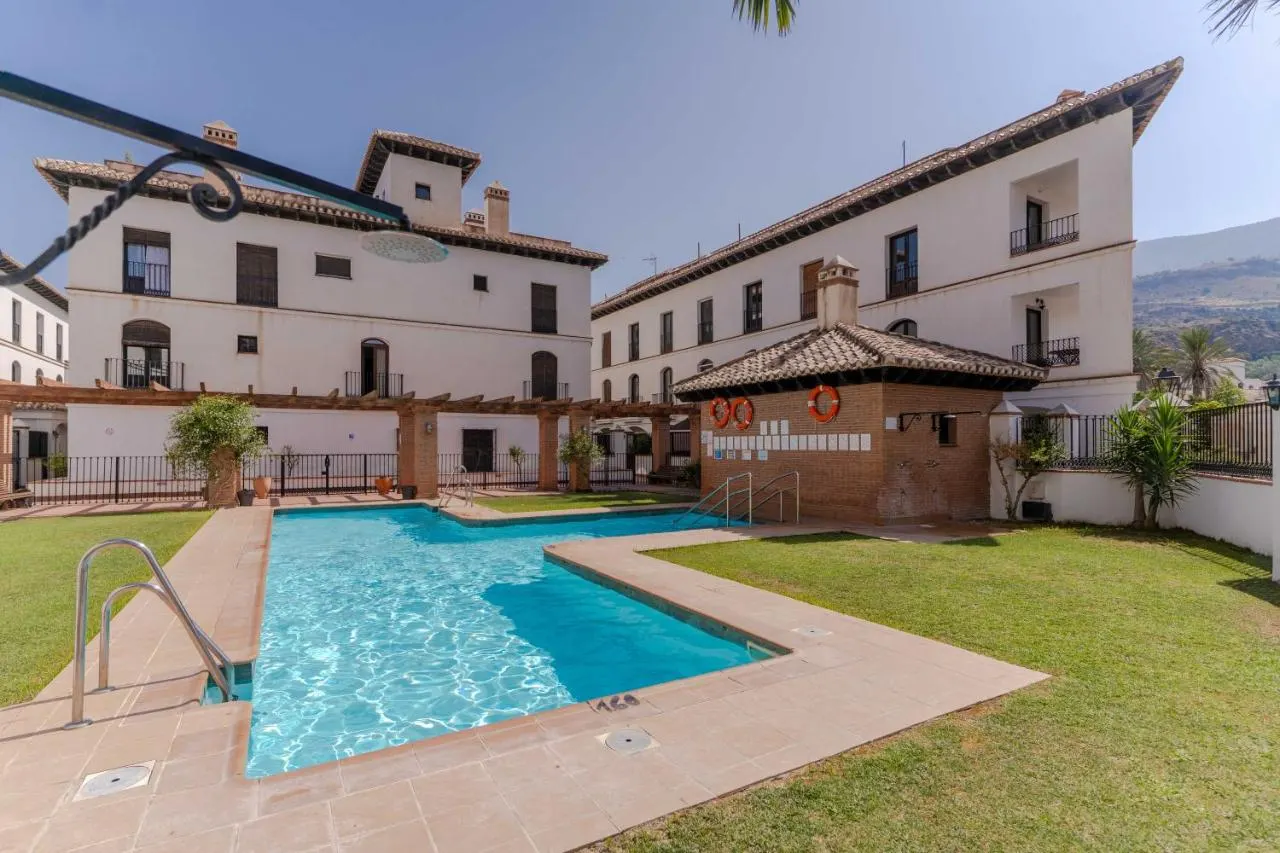
Rincón Salvaje is a two-bedroom holiday duplex for up to 4 guests in Vélez de Benaudalla, beside the A-44, with a public car park nearby. It is booked only through Airbnb and Booking.com.
- Where to stay: compare coast, city, mountains and valley
- Budget: the main costs of a trip to the area
- Remote work in Andalusia: city, coast or village for a stay of several weeks
- Car hire in Andalusia: real total cost, fees, insurance and a calculator
- Driving in Andalusia: speed limits, V-16 beacon, tolls and parking

Frequently asked questions
Is Vélez de Benaudalla on the way between Granada and the coast?
Yes. It lies in the Guadalfeo valley beside the A-44, the motorway from Granada to the coast, near its southern end. It is inland, not on the sea: the Booking.com listing of Rincón Salvaje gives 16 km to the Peñón de Salobreña.
How many days do I need for a Granada and Costa Tropical road trip?
Four days covers Granada, one coast day and the Alpujarra; five or six days is more relaxed and leaves time for both ends of the coast or a walk in the Poqueira gorge.
Are there tolls on the coast road?
The A-7 along the coast is a toll-free autovía (it is the free alternative to the tolled AP-7 further west).
Can I drive into central Granada?
Traffic is restricted in the city centre. Only guests of official accommodation inside the restricted areas may drive to it, by a single authorised route. Otherwise, park and walk or take the bus.
How long does it take to drive from Granada to the Costa Tropical?
It depends on traffic and where you start and finish. Check a route planner on the day: the route is the A-44 south to the A-7.
Is Vélez de Benaudalla a good base for a road trip in southern Granada?
If you have a car and want to combine Granada, the coast and the Alpujarra without changing accommodation, yes. If you want to walk to the beach or have no car, a coast town or Granada city suits you better.
Sources · Facts checked on 8 November 2026
- Wikipedia · A-44 motorway (Spain): Bailén–Granada–coast, ends on the A-7 at La Gorgoracha
- Wikipedia · Autovía A-7 (Motril–Nerja section; toll-free)
- Granada Tourism (Ayuntamiento de Granada) · Areas with traffic restrictions
- Wikipedia · Vélez de Benaudalla (A-44, Guadalfeo valley)
- Booking.com · Rincón Salvaje listing (distances, parking, pets)
- Patronato de la Alhambra y Generalife · official FAQ
- Diputación de Granada · Jardín Nazarí de Vélez de Benaudalla
- Turismo de Salobreña · Castle
- Andalucía.org · Aqueduct and Roman baths in Almuñécar
- Motril Turismo · Municipal market
- Ayuntamiento de Motril · Charca de Suárez, hours and visits
- MITECO · Sierra Nevada National Park, cultural values (Poqueira BIC)